
One incident, years of damage
A hidden camera in a hotel room is not a theoretical risk. Hotels worldwide have faced lawsuits, media coverage and an immediate decline in occupancy rates following incidents involving unauthorised recording equipment. The financial damage is often just the tip of the iceberg, the reputational harm continues for years.
According to industry analyses, a single privacy scandal can cause occupancy to fall by 15 to 30 percent in the months after the incident. For a mid-sized hotel that quickly translates into hundreds of thousands of euros in lost revenue. On top of that come legal costs, potential fines from data protection authorities, and the loss of corporate contracts with tour operators and business accounts.
What do recent cases show?
In recent years, several high-profile incidents have exposed the vulnerability of the hospitality sector. In the United States, a case against a major hotel chain resulted in a settlement of tens of millions of dollars after a guest was filmed through a hidden camera in the peephole of her room door. The footage was distributed online before the hotel was even aware.
In South Korea, more than 1,600 hotel guests were live-streamed via hidden cameras in 2019, the scandal led to national legislation and a dramatic decline in tourism in affected cities. European hotels have faced reports too. The accessibility of spy equipment through international web shops makes the problem universal: miniature cameras are available from just a few tens of euros and are increasingly difficult to detect without professional equipment.
How does reputation damage unfold in practice?
The damage follows a predictable pattern that, in the modern media environment, unfolds at extraordinary speed:
- Discovery and publicity, guests share their experience on social media and review platforms. A single post can go viral within hours and reach millions of people.
- Media attention, local and national press pick up the story. The hotel name becomes inseparably linked to the incident, including in search results.
- Review bombing, other users post negative reviews, even if they never visited the hotel. Platforms such as TripAdvisor and Google Reviews are flooded.
- Booking decline, corporate clients and tour operators cancel contracts. OTA scores drop structurally, undermining visibility and conversion on booking platforms.
- Legal proceedings, damage claims from affected guests and investigations by data protection authorities follow. For breaches of the GDPR, fines can run up to 4% of annual turnover.
What makes reputation damage particularly insidious is that it does not unfold in a linear way. Even after legal proceedings have concluded and the media attention has died down, negative search results and reviews remain visible for years. Prospective guests who google the hotel name encounter reports of the incident, long after the problem itself has been resolved.
What can a hotel do preventively?
Prevention is significantly cheaper than cure. A professional hospitality security programme comprises several layers of protection:
- Safety assessment, a comprehensive analysis of physical access, camera positions, Wi-Fi networks and key systems that maps out vulnerabilities
- Hidden camera detection, professional TSCM sweeps using RF detection, non-linear junction detection and thermal analysis to locate unauthorised equipment
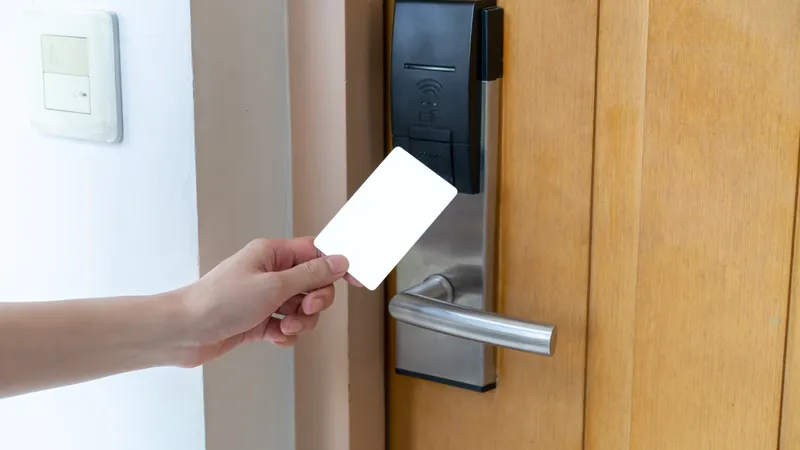
- Keycard fraud testing, testing key card systems for vulnerabilities that allow unauthorised room access
- Red teaming, specialists who enter your hotel as guests and test security in practice, including staff alertness
It is also advisable to commission a mystery guest compliance investigation. Independent investigators assess whether your security protocols are actually followed in daily practice, from the front desk to housekeeping.
Certification as proof of quality
Following a positive result, your hotel can be certified through Privacy Shield Group. This mark demonstrates to guests and business partners that you take guest privacy seriously and that your hotel is periodically audited by independent specialists. SAJ Recherche carries out the inspections and assessments that form the basis of this certification.
Such certification also offers commercial advantages: a growing number of corporate travel agencies and tour operators select hotels partly on the basis of privacy and security measures. The mark can therefore provide a distinctive competitive advantage.
Conclusion: don’t wait until it’s too late
The question is not whether hidden cameras pose a risk to the hospitality sector, but when it will affect your hotel. Proactive security is the only way to protect your guests, your reputation and your business. The cost of prevention bears no relation to the potential damage of an incident.
Want to know how vulnerable your hotel is? Contact SAJ Recherche for a free, confidential conversation about the security options for your hotel.
Read also
- Hidden cameras in hotels: legal liability
- TSCM inspection for hotels and resorts
- Social media false camera reports at hotels
Related services: Hospitality Privacy & Security · TSCM Inspection · Mystery Guest & Compliance
SAJ Recherche B.V. is a private investigation agency licensed by the Dutch Ministry of Justice (POB 8779). Chamber of Commerce 96790954.

SAJ Recherche Editorial
The SAJ Recherche editorial team writes about investigation, fraud, evidence law and security. POB licence 8779.
Cite this article
APA
SAJ Recherche (2025). Hidden cameras in hotels, reputation damage that costs millions. sajrecherche.com. https://sajrecherche.com/en/blog/hidden-cameras-hotels-reputation-damage HTML
<a href="https://sajrecherche.com/en/blog/hidden-cameras-hotels-reputation-damage">Hidden cameras in hotels, reputation damage that costs millions</a>, SAJ Recherche