
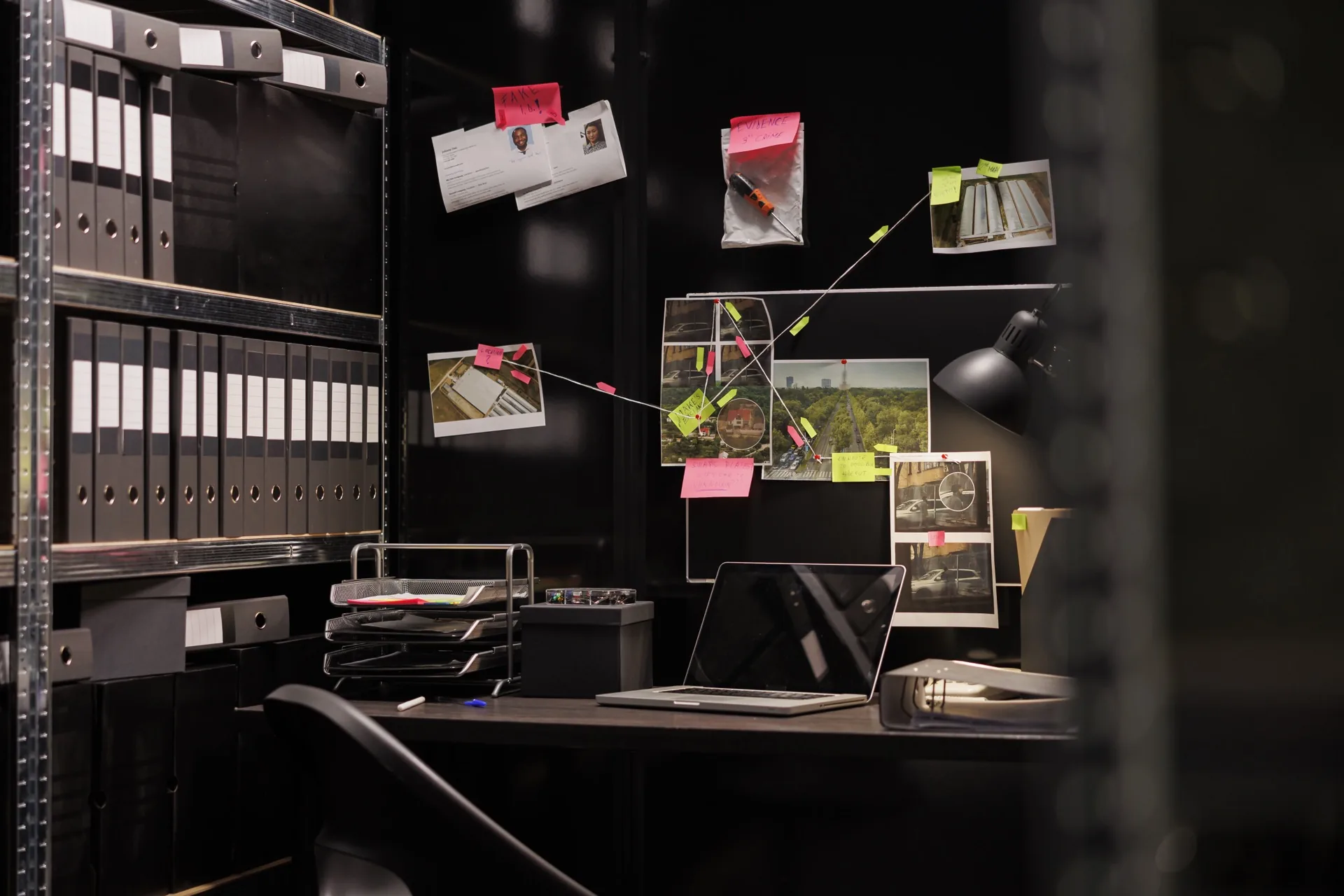
OSINT, social media and digital evidence analysis
What people and companies leave behind online often says more than what they declare. We find it, document it forensically and translate it into usable evidence.
Legal
OSINT, Social Media and Digital Evidence Analysis
In 2025, 96 percent of Dutch residents aged 12 and over were online every day (Statistics Netherlands, Digitalisering en kenniseconomie 2025, in Dutch). Living online leaves traces: profiles, posts, photos with metadata, registrations, business connections, reviews and classified ads. Open Source Intelligence (OSINT) is the systematic collection and analysis of that publicly accessible information. It goes beyond a search query: it is targeted searching with professional tools, manual verification and forensically sound documentation, so the result holds up when you submit it. On this page we combine three forms of investigation that belong together in practice: OSINT investigation, social media investigation and the analysis of digital evidence you already hold.
What we investigate
OSINT investigation
We analyse public registers and open sources: the Dutch Trade Register and foreign company registers (directors, UBOs, shareholdings), the Land Registry, insolvency registers, domain and website data, media coverage, public profiles and networks between people and entities. Applications: hidden assets or sham structures in fraud cases, actual income or cohabitation in family law, side activities or breach of a non-compete clause in employment law, infringement of intellectual property.
Social media investigation
Social media are an important source for private and corporate questions: someone who claims to be unfit for work but posts sporting achievements, a former partner who conceals a new cohabitation, a former employee who openly works for a competitor. We investigate only what is publicly accessible, without fake profiles or access to restricted accounts, and record each finding with URL, date, time and screenshot.
Digital evidence analysis
Emails, chat messages, documents, photos and transaction data you already hold raise questions: is this authentic, when was it created, has it been tampered with? We analyse metadata, time stamps and consistency, secure files with a hash so integrity is demonstrable, and document the chain of custody. For in-depth forensic examination of devices we work with specialised forensic IT partners.
Legal framework
A private investigation agency processes personal data on the basis of the client's legitimate interest (Article 6(1)(f) GDPR, Regulation (EU) 2016/679). We assess and record that interest at intake. We also work under the Dutch privacy code of conduct for private investigation agencies, which is binding on all Wpbr licence holders: collect no more than necessary, keep it no longer than necessary, and no investigation without a legitimate interest. Social media evidence obtained in this way can be submitted in civil proceedings; the court weighs it freely (Article 152 DCCP).
How does the investigation work?
we discuss the research question and determine which sources are relevant and permissible.
you receive a plan with sources, methods, timeline and a fixed price.
specialists carry out the investigation with professional tools and manual verification; every finding is documented forensically.
a report with screenshots, source references, metadata and a factual conclusion, ready for use in your strategy.
Want to discuss your situation?
Contact us for a free, confidential consultation.
⚖️ Legal framework
SAJ Recherche operates in compliance with the Dutch Private Security and Investigation Agencies Act (Wpbr) and the General Data Protection Regulation (GDPR/AVG). All investigations are conducted under POB licence 8779, issued by the Ministry of Justice and Security.
Legal recognition and licences



DIRECT CONTACT
Request a callback
Leave your details and we will call you back as soon as possible, free and without obligation.
Frequently asked questions
Is an OSINT investigation legal?
Do you only use public sources?
Can deleted messages still be retrieved?
Can social media evidence be excluded by the court?
How quickly is an OSINT report ready?
Do you also work internationally?
Read more about osint, social media and digital evidence analysis